Stop and Smell the Roses
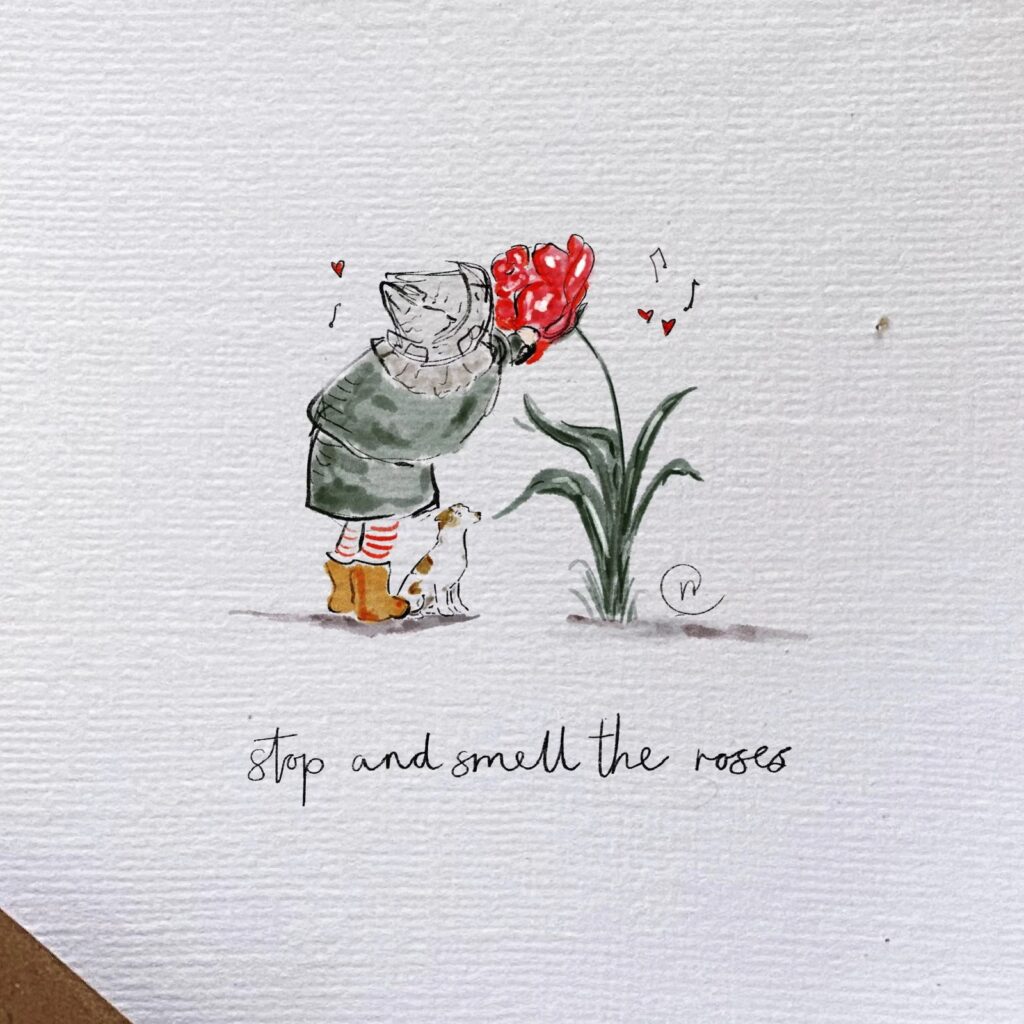
Whenever we try to run life by our own terms, it fills us with sorrow in that very moment. We accelerate the speed of our thoughts — but life is not determined by thought; it is decided one moment at a time. Thoughts have no feet, nor do they have wings. Yet they travel faster than life itself, faster than the light of the sun, faster than the speed of the wind. But we remain standing still, while thought completes its journey and returns to us — and in that moment, we are left dejected and filled with grief. We begin to wonder: When will time pass, and how? Why is everything moving so slowly? And it is precisely this that becomes the source of a person’s suffering.
Today, as fast as a person runs, their thoughts run even faster. From children to adults, everyone wants to gain more in less time. No one wants to pause and truly live where they are. So what is passing by is being lost, and what has not yet arrived is being chased.
Everyone is spending life — but lived by no one.
Pause for a moment. Look around at where you are right now, because this moment will never return. Everyone must reach their destination, but whether they arrive with an empty bag or with a bag full of golden memories — that is something each person must decide for themselves. Remember, golden memories belong only to those who truly live life. For those who merely pass through it, all that remains is sorrow and sadness.
—–SARIKA KAUR
A Mother’s Shadow Over Her Daughter’s Marriage
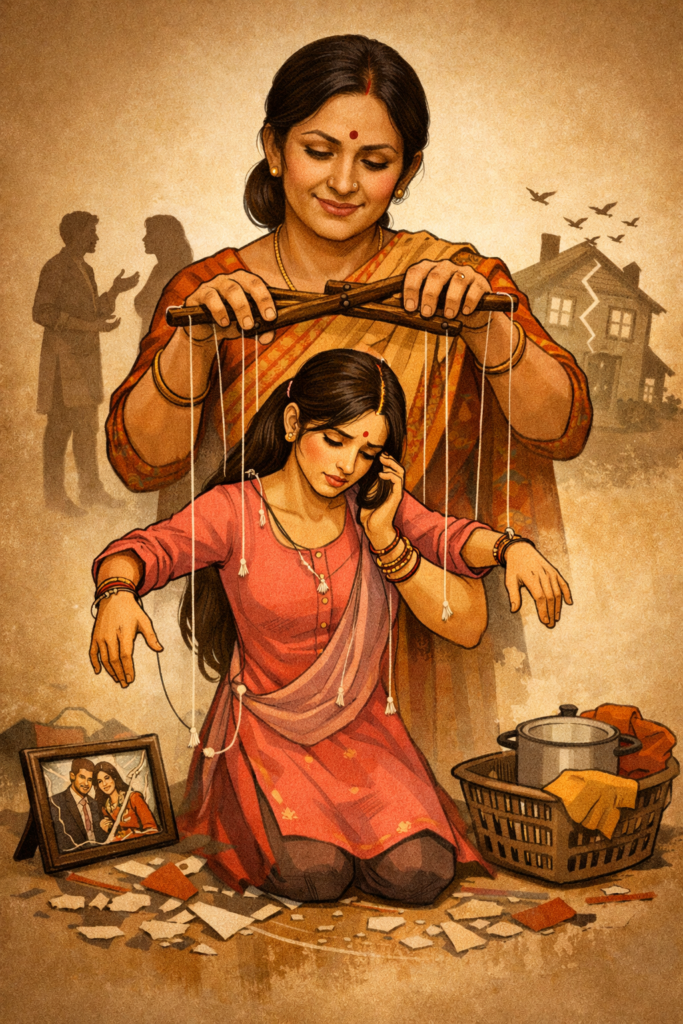
“Mom, I don’t want to play with other children — I want to stay home. With you, sheltered in your embrace. Mom, I want to go to the market, but only with you. Mom, what should I wear today? There is no mother better or wiser than you. Mom, tell my brother to do my work for me” — and she wouldn’t even try herself.
Manjhari — yes, that was her name — dependent on her mother at every moment. When to make what decision? She could never figure that out on her own. By nature she was short-tempered, considered everyone else a fool, yet did no work herself. The word “compromise” was simply not in her vocabulary. All she knew was to say what she wanted — and get it done.
The mother, mistaking her daughter’s dependence and laziness for love toward her, would make every possible effort to fulfill her daughter’s wishes. But who would tell the mother that this was not love? And if anyone tried to tell her, the mother would consider that person her daughter’s enemy.
Then came the day when the daughter was wed and sent to another home. But she did not let go of her mother’s edge even there. Even the smallest matter in her in-laws’ house she would bring to her mother; every piece of advice she sought from her mother. The mother, too, was physically present with her sons, but her heart was with her beloved daughter.
The mother-daughter duet ended up creating a storm in the daughter’s own life — a darkness began to fall over her married life. The waves of the ocean rose high and fast. The relationships with the in-laws began to fly away like birds. One by one, the entire home was ruined — yet the mother’s classroom never closed.
This was the mother’s love that destroyed her daughter’s home.
Countless marriages in society are breaking for these very reasons. Mothers, forgetting their own role, are themselves dismantling their daughters’ homes. This is why, if Pre-marriage & Relationship Coaching were provided to mothers and daughters before marriage, so many homes would not be destroyed.
—–SARIKA KAUR
माँ
माँ शब्द हमें जीवन के आखिरी पल में भी बच्चा होने का एहसास कराता है । जिसके प्यार भरे आँचल में बच्चा स्वयं को सबसे ज्यादा सुरक्षित महसूस करता है। माँ का साया बच्चे को दुख की हर धूप में छाया समान प्रतीत होता है । माँ हर दर्द सहकर भी बच्चे की इच्छा को पूरा करके सदा मुसकुराती है । बच्चा सिर्फ माँ का ही है ऐसा ही स्वीकारती है वह ।
यदि यह सत्य है तो यह भी जान लीजिए कि ऐसा करके आपने अपने ही बच्चे को कमजोर, डरपोक और जिद्दी बना दिया है। उसकी हर बात स्वीकार कर आपने अपने ही हाथों से अपने बच्चे के भविष्य को अंधकार से भर दिया है।
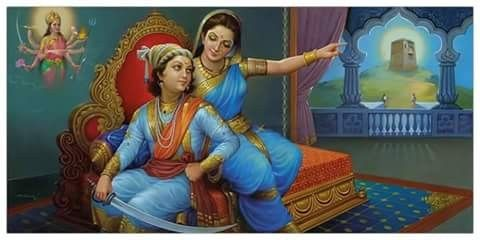
माँ तो बच्चे की प्रथम शिक्षक होती है। माँ अपने स्वरूप को पहचानो। आप ही सीता, कुंती, द्रोपदी, सुभद्रा, माता गुजरी, जीजाबाई और समस्त क्रांतिकारियों की माँ हो। जिन्होंने अपने बच्चों को स्नेह, दुलार के साथ-साथ वीर भी बनाया। भारतवर्ष का आने वाला कल अर्थात् अपने देश का भविष्य आने वाली पीढ़ी है और मिट्टी के बरतन रूपी पीढ़ी का कुम्हार कोई और नहीं, माँ आप ही हो। माँ जिस सांचे में डालेगी अपने बच्चे को, उसी के अनुसार बच्चे के चरित्र का निर्माण होगा। क्योंकि बच्चा माँ के साथ ही तो अधिक समय रहता है।
अतः बच्चे को प्यार कीजिए, खूब दुलार कीजिए लेकिन साथ ही यह भी ध्यान रखिए कि आप सिर्फ अपने बच्चे की ही नहीं देश की भी माता हैं, आपकी कोख से देश का भविष्य जन्म लेता है, इसलिये इसे सर्व गुण सम्पन्न बनाने का प्रयास कीजिए।
—– सारिका कौर
Why You Need a “Soul Service” Just Like Your Car

It’s often said that the human mind is filled with many colours, each reflecting a person’s mood. But if you ask me, the mind actually has no colour. I believe people just paint over their true selves—creating a colourful facade—to hide the reality of their lives so that no one can truly “read” them. A big part of my work as a life coach is looking past that dramatic, theatrical display of colours to understand the “black and white” truth hidden underneath.
We all go through tough times; the only thing that changes is the situation. But that doesn’t mean we should just give up, break down, or let the pace of our lives come to a halt. As I mentioned in my first article: change isn’t the end of life, it’s the start of a new path. These days, every other person thinks they are mentally “ill” or “weak.” If you ask someone what’s wrong, they’ll quickly say, “I’m depressed,” even if they don’t really know what that means. To me, most people are just victims of their circumstances who haven’t yet learned the art of living. And yes, living life is an art. Just like you service your car or your gadgets, you need to “service” yourself once in a while, too. Sadly, very few people actually do.
If you look at history, whenever kings felt overwhelmed by a decision, they would turn to their Rajgurus or mentors for advice. Things haven’t changed much—only the name of the mentor has. Today, counsellors have stepped into that role.
To live a life free of constant worry and to move confidently with the times, you should definitely check in with a life coach every now and then. Society is in a tough spot right now; it seems like there are a thousand reasons to be sad, but hardly any to be happy.
—–SARIKA KAUR
From Self to Society
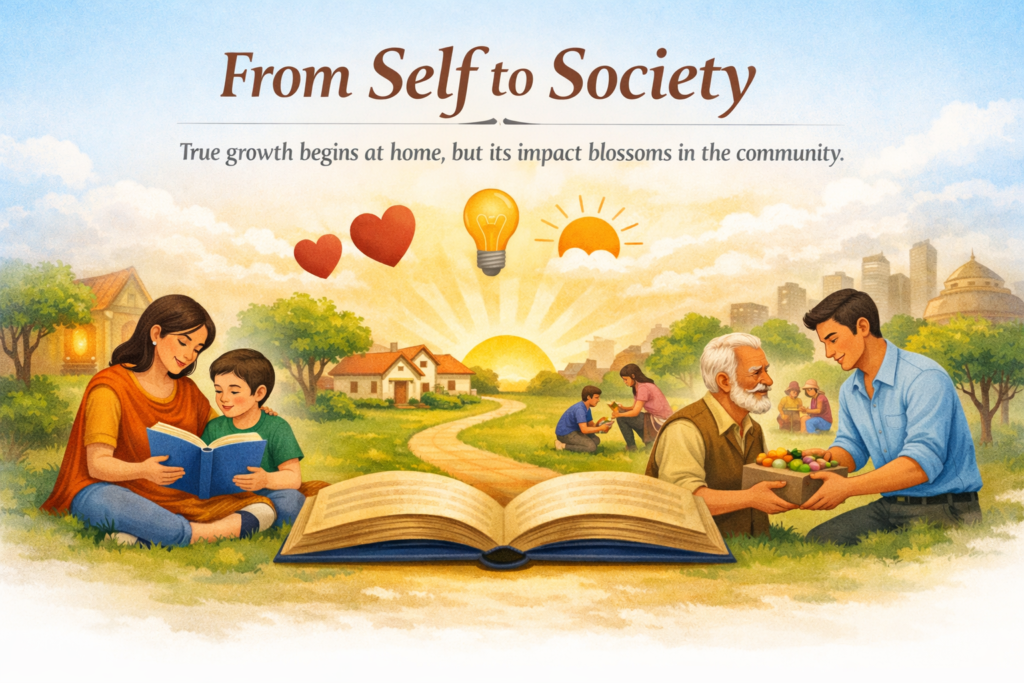
It is essential to give children practical education, and therefore talking or discussing this subject is equally important. But whenever the topic of behavior arises, the question immediately comes up: who will decide which behavior is right and which is not? Everyone’s views differ, and accordingly, the way of behavior changes. Something may seem right to me but wrong to you, because here behavior is decided on the basis of “I” — which is a wrong approach. That is why it is said that a child first receives practical knowledge of behavior from home, and later learns from society what feels right to them or what they experience through the way society treats them.
Therefore, I would urge all parents to first recognize and accept their own strengths and weaknesses. Then behave well with your child, and try to keep them away from your shortcomings. For example, if you want your child to grow up cheerful, do not show them a sad, angry, or quarrelsome face. Speak to them with love, not in loud anger. Keep the atmosphere of the home pleasant. In this way, we shape behavior in other aspects too.
But it is painful to see that today society is following a mindset where parents live with two standards — one for themselves and another for others. The point is that society is living with a double mentality. That is why a cultured society is disappearing, and the responsibility lies solely with parents.
Thus, I repeat: step out of the “I” mindset and work for the welfare of society. Be practical in your behavior and make your children practical too.
—–SARIKA KAUR
My Own Wings

The grief that resides within us often plays a silent role in pushing us toward wrong decisions in life. Our inner circumstances are never what they appear to be — what remains the same is only the outer layer, and it is by looking at that outer layer that we make our judgments.
A mother sees her daughter the way she once saw herself in childhood. And when she grows up and identifies what she believes to be the cause of her suffering, she decides in that very moment — “I will not let my daughter repeat this mistake” — without ever pausing to question whether what she holds responsible truly caused her pain, or whether the real reason lay somewhere else entirely.
And so, by seeing herself in her daughter, she begins making her daughter’s life decisions herself.
Parents are guides — not decision-makers.
Just as you learned certain things through your own thinking and experience, your children hold that exact same right. By taking their right to choose into your own hands, you are unknowingly making them weaker. No one knows better than a child what they want to become in life. Whatever work they choose, support them in mastering it. Work carries no hierarchy of worth. We give our 100% only to the work that brings true satisfaction to our soul.
There was a time when someone else was the decision-maker in your life — and because of that, you could not have what you truly wanted. You then tied that unfulfilled desire to your sense of pride and shame. But today, you are repeating that very same story.
Do not force your children.
—–SARIKA KAUR
KARMA

As long as zero stands alone — performing no action, connecting with nothing — it carries no value of its own. It simply exists, without meaning or weight.
But the moment it joins another number in a positive way, placing itself after — as in 100 — it does not merely add to that number’s worth, it multiplies it. It elevates others while rising itself.
And yet, when it positions itself negatively — slipping before, as in 0.001 — it does not destroy, but it diminishes. It pins a number exactly where it stands, leaving it small and fixed, unable to move forward until it finds support from somewhere else.
We are no different.
When a person chooses inaction — when they neither give nor contribute, neither connect nor care — their life, however quietly lived, remains without real purpose. They are the zero standing alone.
But when a person acts with intention and kindness toward others, they do not merely improve one life — they expand the positivity of an entire society. They make the world around them stronger, more alive, more meaningful.
And when a person chooses negative action — cruelty, selfishness, harm — they do not simply damage those around them. Like a zero placed in the wrong position, they diminish what could have been great, and leave things smaller than they found them.
Here lies the truth we often forget —
Your actions are never yours alone.
They ripple outward — through every person you touch, through every living being that shares this world with you, through the very energy that holds the universe together.
What you do, matters. Not just to you. To all of us.
—–SARIKA KAUR
Pre-parental Coaching
“Family — The First School of the Soul“
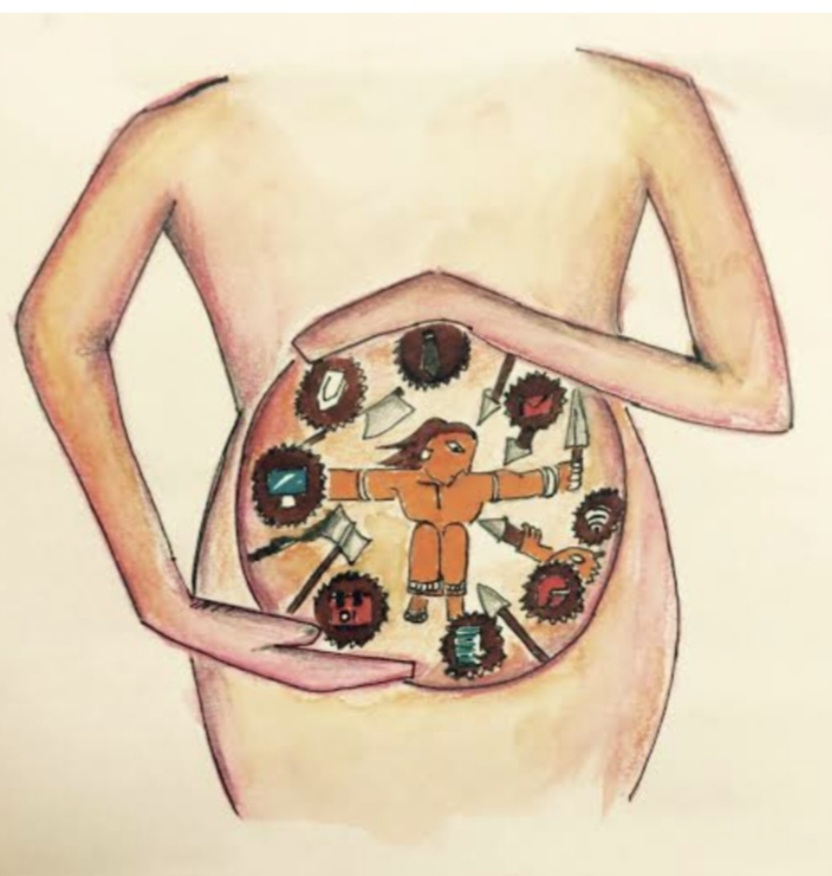
Family is where life begins. A child is born here, grows moment by moment like a tender plant, and absorbs the values of faith, civilization, and culture the way leaves drink in sunlight. In time, like a tree standing tall and full, they spread their branches, bear fruit, offer shade in difficult seasons, and when the moment demands it — temper themselves in fire, so that others may find light.
Every parent carries this dream in their heart — a child rooted in values, strong in character, and graceful in conduct.
Yet when that child falls short, the blame is swiftly placed on society, on the times, on the world outside — rarely on the seeds that were sown at home.
But where does a child first learn how to live?
In the absence of cultural and spiritual grounding from an early age, children can lose their way entirely — sometimes even acting against the very values their family holds dear. The reason is not rebellion. The reason is emptiness. When a child grows up without knowing their own faith, how can they be expected to understand their duties? For the first and most fundamental duty of every human being is Dharma — a sense of righteous purpose that must be awakened early, or it may never fully awaken at all.
Too often, childhood passes in studies and play — which is natural and good. But festivals come and go without explanation. Ancestors are mentioned without stories. Sacrifices are forgotten before they are even known. How many parents sit with their children and say — “This day matters, and here is why”? How many speak of those who came before, of what they endured, of what they gave up so we could live as we do?
To treat a child as simply a child — forever — and to look away from their mistakes, is not patience. It is an escape from responsibility.
From the very first day of life, every human being becomes a student. And they remain a student until their very last breath. This understanding — that life itself is a classroom — is what shapes truly great human beings.
A person’s first teachers are their parents. And if those first teachers fail to teach, the child grows without roots. They may rise, but they will not stand firm. They may go far, but they will not know where they belong.
This is why the time has come to make pre-parental coaching not an option, but a necessity — so that long before a child arrives in this world, parents are prepared. So that from the very first moment of life in the womb, a mother and father already understand their role, their responsibility, and the profound gift they have been entrusted with.
Because the future of every child begins — not at school, not in the world — but at home. With you.
—–SARIKA KAUR
“Early Vows, Mature Bonds — Who Carries the Weight?”

As age gradually increases, the nature of relationships and responsibilities also change. Today we will talk about marital relationships, where we will understand the responsibilities involved in making a marriage work at two different stages of life.
First, let’s talk about marriage before the age of 30–35. A marriage at this age is not merely the union of a boy and a girl — rather, it brings together two families with entirely different thoughts and lifestyles. Therefore, the responsibility for making this marriage successful lies equally with the boy and the girl, as well as with their families. Whether it is the boy’s parents or the girl’s, both sides must embrace each other’s families to sustain the relationship. Both the boy and girl are energetic and unsettled in life at this age, but at the same time, their capacity to compromise and adapt to circumstances is also greater. If both families maintain warm and affectionate relations with each other, the marriage has a much higher chance of being happy and harmonious.
On the other hand, a marriage after the age of 35–40 is a bond formed between a man and a woman where the complete responsibility of sustaining that relationship rests solely on the two of them. There is no need for the intervention of any third person. By this age, both individuals have developed their own personal perspectives on every matter — much like their own parents. They are now at an age comparable to that of parents of two children. Their capacity for mutual compromise is lower, and due to greater life experience, they have already formed their own distinct way of understanding and viewing every subject. Most marriages at this age are entered into after careful thought and thorough evaluation, where the man and woman prioritize mental compatibility over physical pleasure.
Therefore, marriages before the age of 30–35 have a greater need for Pre-marriage and Family Relationship Coaching. On the other hand, for marriages after 35–40, coaching is needed only in those relationships where individuals have been unable to learn even from their own life experiences.
—–SARIKA KAUR